
Unraveling the Healing Science of Foot Reflexology
Discover how foot reflexology works, what each pressure point represents, and how reflexology may support physical wellness, emotional balance, and relaxation.
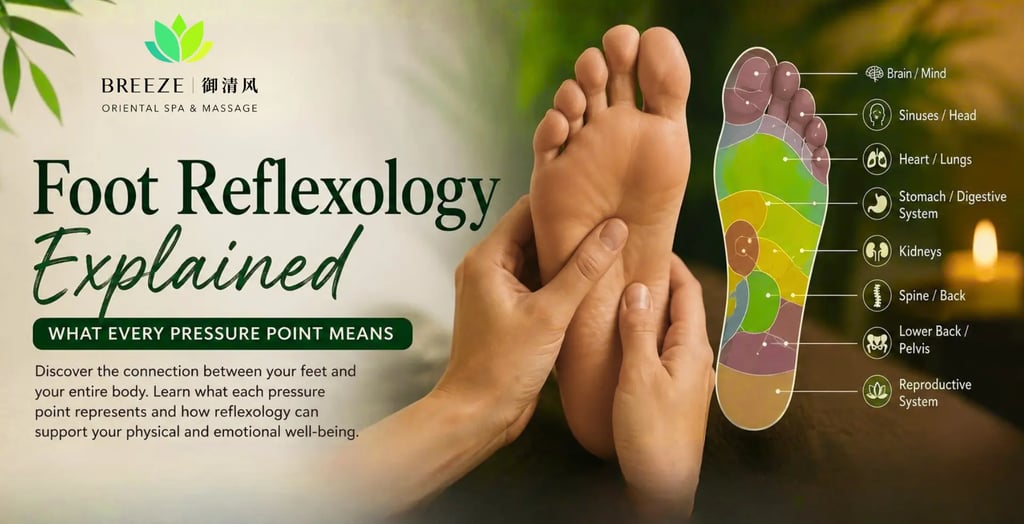
Foot Reflexology Explained:
What Every Pressure Point Means
Have you ever wondered why a therapist spends extra time pressing certain areas of your feet during a foot massage? According to the principles of foot reflexology, different areas of the feet correspond to various organs, glands, and systems throughout the body.
For centuries, reflexology has been practiced as part of traditional Eastern wellness therapies. While it is not intended to diagnose or treat medical conditions, many people enjoy reflexology for its relaxing effects and its potential to support overall well-being.
At Breeze Oriental Spa, our Oriental Foot Massage incorporates reflexology-inspired techniques that help promote relaxation, restore balance, and relieve everyday stress.
What Is Foot Reflexology?
Foot reflexology is based on the theory that specific points on the feet are connected to different parts of the body through energy pathways and nerve connections.
By applying pressure to these reflex points, therapists aim to encourage relaxation, improve circulation, and support the body's natural ability to maintain balance.
Think of your feet as a map of the body. Each section represents a different organ or system, creating a fascinating connection between foot care and whole-body wellness.
Understanding the Reflexology Map
The toes generally represent the head and upper body, while the arch of the foot corresponds to internal organs. The heel and ankle areas are often associated with the lower body, hips, and reproductive system.
Here are some of the most commonly recognized reflexology zones.
The Big Toe: Brain and Mind
The big toe is often associated with:
Brain function
Mental clarity
Concentration
Pituitary gland
Pineal gland
Emotional Connection
When people experience mental fatigue, overthinking, stress, or difficulty concentrating, reflexologists often pay attention to this area.
Many clients report feeling calmer and mentally refreshed after stimulation of the big toe reflex points.
The Toes: Head, Sinuses, and Neck
The smaller toes are believed to correspond with:
Sinuses
Eyes
Ears
Head
Neck
Emotional Connection
Tension in these areas may be associated with mental stress, information overload, and emotional pressure from busy lifestyles.
Stimulating these points is often used to encourage relaxation and a sense of mental lightness.
Ball of the Foot: Heart and Lungs
Located just beneath the toes, the ball of the foot is commonly associated with:
Heart
Lungs
Chest area
Emotional Connection
In many traditional wellness philosophies, this region is linked with emotions such as:
Anxiety
Grief
Emotional stress
Feelings of overwhelm
Pressure applied here is often intended to encourage deeper relaxation and emotional release.
Center of the Foot: Stomach and Digestive System
The middle portion of the foot corresponds to:
Stomach
Pancreas
Liver
Gallbladder
Digestive organs
Emotional Connection
Traditional Eastern wellness systems often associate digestive health with emotional processing.
When individuals experience prolonged stress, worry, or nervousness, tension may manifest in this region.
Reflexology in this area is commonly sought by those looking to support relaxation and digestive comfort.
Arch of the Foot: Kidneys and Adrenal Glands
The arch is one of the most important areas in reflexology and is believed to correspond with:
Kidneys
Adrenal glands
Energy regulation
Emotional Connection
The adrenal glands play a key role in the body's stress response.
In reflexology traditions, this area is often associated with:
Burnout
Chronic stress
Fatigue
Exhaustion
Many busy professionals appreciate stimulation of the arch because it promotes a deep sense of relaxation and renewal.
Inner Edge of the Foot: Spine
The inside edge of each foot is believed to mirror the spine.
Areas may correspond to:
Cervical spine
Thoracic spine
Lumbar spine
Sacral region
Emotional Connection
Physical tension and emotional stress often go hand in hand.
Reflexology practitioners frequently focus on this area to encourage overall relaxation and support postural comfort.
Heel Area: Lower Back and Pelvic Region
The heel is commonly associated with:
Lower back
Sciatic region
Hips
Pelvis
Emotional Connection
Traditional reflexology often links this area with feelings of stability, grounding, and security.
Many people who spend long hours standing, walking, or sitting find heel-focused massage particularly soothing.
Ankle Area: Reproductive and Hormonal Systems
The ankle region is believed to correspond with:
Reproductive organs
Hormonal balance
Endocrine functions
Emotional Connection
In traditional wellness philosophies, this area may be associated with emotional balance, personal relationships, and overall vitality.
Gentle massage in this region can contribute to a calming and nurturing experience.
Can Reflexology Affect Emotions?
One reason many people enjoy reflexology is the feeling of emotional relief that often accompanies a session.
While scientific evidence primarily supports reflexology as a relaxation therapy, many clients report experiencing:
Reduced stress
Improved mood
Better sleep quality
Enhanced relaxation
Increased sense of well-being
This may be due to a combination of therapeutic touch, reduced muscle tension, improved circulation, and dedicated time for self-care.
Benefits of Foot Reflexology
People often choose reflexology as part of their wellness routine because it may help:
Promote deep relaxation
Reduce stress and tension
Improve circulation
Relieve tired feet
Support better sleep
Enhance overall wellness
Encourage mental clarity
Provide a calming self-care experience
Experience Reflexology-Inspired Foot Massage at Breeze Oriental Spa
At Breeze Oriental Spa, our Oriental Foot Massage combines traditional massage techniques with reflexology-inspired pressure point work to help you unwind from the demands of everyday life.
Whether you're a busy professional, frequent traveler, or simply someone looking for a relaxing wellness experience, our skilled therapists can help you enjoy the restorative benefits of foot massage and reflexology.
Final Thoughts
Foot reflexology offers a fascinating perspective on the connection between the feet, body, and mind. By understanding what different pressure points represent, you can gain a deeper appreciation for the art and tradition behind Oriental Foot Massage.
While reflexology should not replace professional medical care, it remains a popular wellness practice for those seeking relaxation, stress relief, and a greater sense of balance in their daily lives.
Book your next Oriental Foot Massage at Breeze Oriental Spa and discover why your feet may hold the key to total relaxation and well-being.